



Last Updated: August 14, 2026
Why Doors Are the Primary Entry Point for Break-Ins
Doors are the weakest link in your home's security. Most burglars don't climb through windows or cut holes in walls, they kick through doors. The reason is simple: a standard door frame, strike plate, and lock were never designed to withstand the force of a deliberate kick or shoulder charge.
When someone applies 300+ pounds of force directly at the lock area, the frame gives way. The strike plate pulls away from the jamb. The door slab itself splinters. You have maybe seconds before entry is gained. That's not enough time to do much of anything except react in panic.
The good news: you can change this equation dramatically. By reinforcing your door's weak points, you create enough resistance to buy critical time, time to call 911, get to a safe room, or prepare a defense. This is where preventing door kick in break ins becomes a practical, achievable goal rather than a distant hope.
The entry point matters because it's the only thing standing between your family and an intruder. A locked deadbolt feels secure, but it's only as strong as the frame holding it. Reinforce that frame, upgrade the hardware, and you've eliminated the easiest path inside.
How to Reinforce Door Frame Against Forced Entry
Your door frame is the foundation of any security upgrade. A solid frame stops kicks. A weak frame fails in seconds.
Strengthening the Door Frame Structure
The door jamb, the vertical piece of wood that holds your door, is typically just 3/4 inch thick. When force is applied at the lock area, the jamb flexes and splits. The strike plate (the metal piece that catches the bolt) pulls right out of the wood.
The fix involves two strategies: adding mass and reinforcing the connection points. Galvanized steel door reinforcement plates bridge the gap between your existing frame and the door itself, distributing impact force across a wider area instead of concentrating it at the lock. This prevents the jamb from splitting.
Long screws matter more than you'd think. Standard door hinges and strike plates are secured with short screws that only bite into the soft outer wood of the frame. Replace these with 3-inch screws that penetrate deep into the structural framing behind the drywall. This anchors your hardware to the actual house structure, not just the trim.
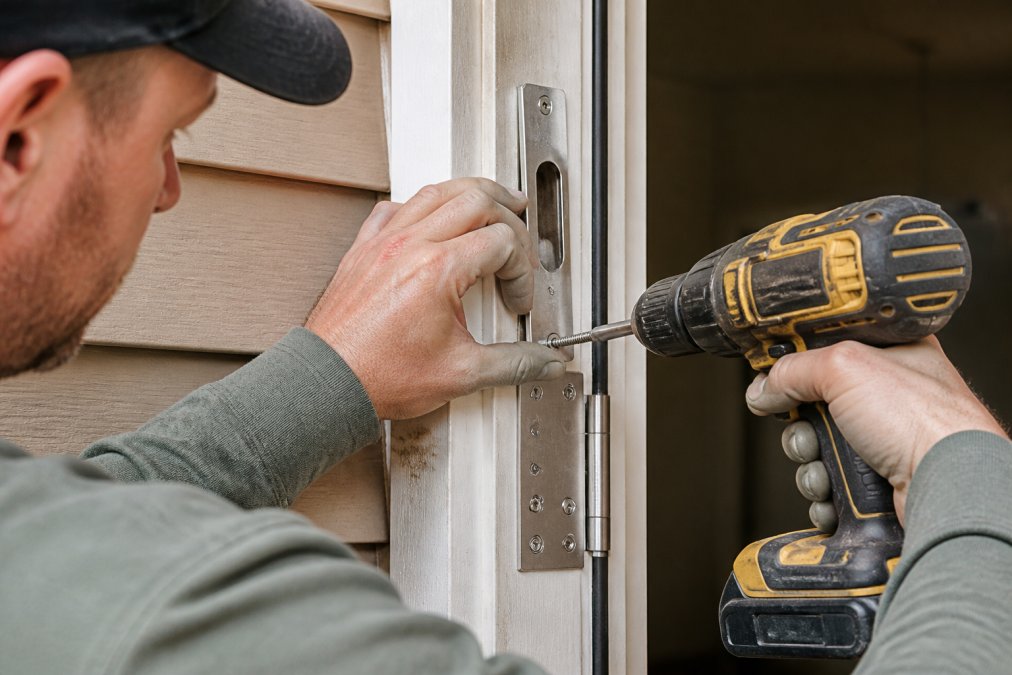
Close-up of a homeowner's hands installing reinforced strike plate and hinge shields on an exterior door frame, with a drill positioned to secure long screws through metal reinforcement plates into the wooden jamb
Upgrading Strike Plates and Hinges
Your strike plate is the target. When someone kicks, the force concentrates right where the bolt enters the frame. A standard strike plate is thin metal with small fasteners. It fails first.
Upgrade to a heavy-duty wrap-around strike plate that covers more of the jamb surface. These plates are thicker, longer, and use multiple screws to distribute the load. They're specifically designed to resist forced entry.
Hinge pins present a different vulnerability. If your door swings outward, someone can simply knock out the hinge pins and lift the door off. Install tamper-proof hinge pins or hinge shields that prevent this. Inward-swinging doors are inherently more secure, but if you have out-swing doors, this upgrade is essential.
Door Reinforcement Kit Options and Installation
A door reinforcement kit packages the components you need in one coordinated system. Rather than buying individual pieces and guessing at compatibility, a kit ensures everything works together.
Single Door Security Systems
For standard single doors, a single-door security kit includes reinforcement plates, upgraded strike plates, hinge shields, and long screws. These kits are designed for doors up to 1-3/4 inches thick and install in under 30 minutes.
The Door Armor Single Door Security Kit is the most straightforward option for protecting your primary entry. It uses galvanized steel reinforcement that matches standard hardware finishes, so the installation looks professional and discreet. The $500 Lifetime Guarantee means if someone successfully kicks through after installation, Door Armor covers the repair costs.
Double and Side Light Door Solutions
Double doors and doors with side lights present unique challenges. There's no center jamb on double doors, so impact force can't be distributed the same way. Side light doors have glass panels that create weak points.
The Door Armor Double Door Security Kit addresses this with a specialized night lock system that secures both panels and prevents them from separating under force. The Door Armor Side Light Door Security Kit uses a sidelight jamb shield that reinforces the vulnerable area around the glass.
These kits cost more than single-door systems because they solve harder structural problems. But if your main entry has side lights or you're protecting French doors, these purpose-built solutions are worth the investment.
Installing a Door Security Bar to Prevent Kick-Ins
A door security bar is a supplementary layer of protection. It's a metal or heavy-duty bar that sits in brackets on the inside of the door, creating a physical barrier that prevents the door from opening even if the lock fails.
Bars work best on doors you control access to, like a bedroom door during a break-in, or a back door you can secure before leaving. They're not practical for main entries where you need quick access.
The advantage of a bar is that it requires no structural modification to your frame. It's rental-friendly and portable. The disadvantage is that it only works if you're home and remember to engage it. A reinforced frame works 24/7 whether you're there or not.
Preventing Door Kick-In Break-Ins: Step-by-Step Installation
Most door reinforcement systems install without special tools or skills. The process takes 20-30 minutes per door.
What You'll Need Before Starting
Gather these items before you start:
- Drill with bits (1/8" for pilot holes, appropriate sizes for your hardware)
- Screwdriver set (Phillips and flathead)
- Measuring tape
- Pencil
- Level
- 3-inch exterior-grade screws
- Your door reinforcement kit components
- Shims (if your frame is out of square)
Most kits include the metal plates and hardware. You provide the drill and screws. Read the kit instructions before starting, different systems have slightly different approaches.
Installation Steps for Maximum Protection
Step 1: Remove existing hardware. Unscrew your current strike plate and hinge covers if applicable. Keep the old screws, you'll replace them with longer ones.
Step 2: Install reinforcement plates. Position the metal reinforcement plates according to the kit instructions. These typically mount over the strike plate area and hinge locations. Use a level to ensure they're square.
Step 3: Drill pilot holes. Drill 1/8" pilot holes through the reinforcement plates into the jamb. Pilot holes prevent wood splitting and make screw installation easier.
Step 4: Install long screws. Replace all fasteners with 3-inch screws. These should penetrate through the jamb into the structural framing behind. This is the critical step, short screws defeat the entire purpose.
Step 5: Install the upgraded strike plate. Mount the new strike plate over the reinforcement plate. It should sit flush and level.
Step 6: Test the door. Close the door and verify the bolt seats properly in the strike. The door should close smoothly without binding.
Step 7: Inspect hinges. If your kit includes hinge shields or tamper-proof pins, install those now.
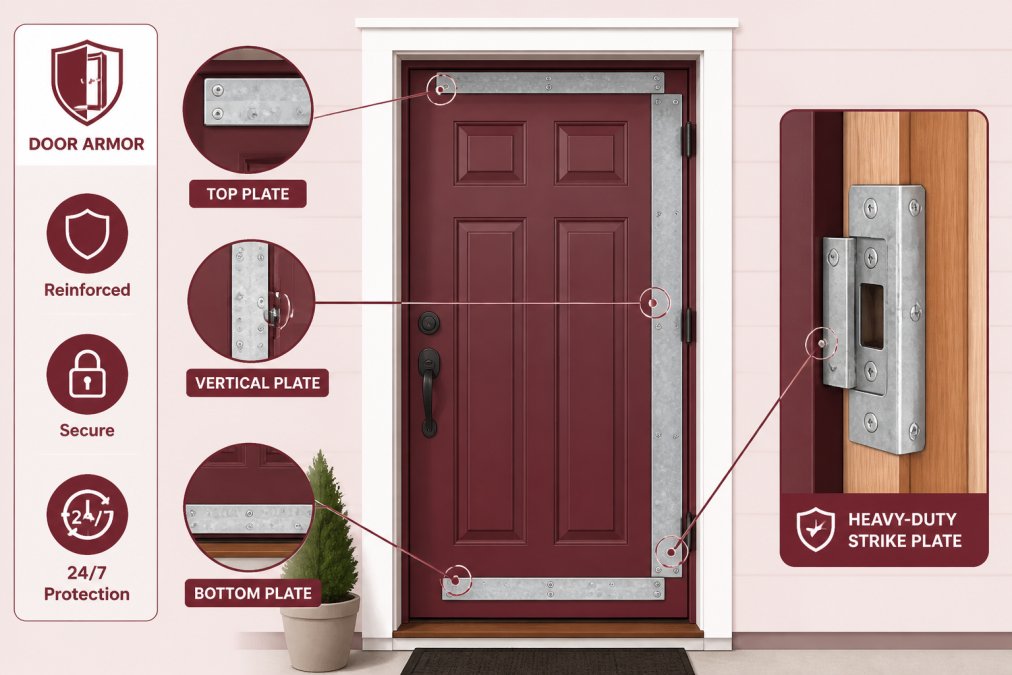
Completed door reinforcement system installed on an exterior door, showing galvanized steel reinforcement plates and heavy-duty strike plate integrated seamlessly with existing hardware and wooden frame
Common Installation Mistakes to Avoid
The most common error is using short screws. Many people reuse the original fasteners or grab whatever screws are in the garage. Short screws only bite into the outer wood of the frame. They fail under impact. Always use 3-inch screws that reach the structural framing.
Another mistake is over-tightening hardware. This can strip the wood or bend the metal. Tighten screws firmly, but stop when you feel resistance. You're not trying to crush the wood.
Skipping the pilot holes creates problems too. Wood splitting weakens the connection and looks unprofessional. Pilot holes take 30 seconds and prevent both issues.
Finally, don't assume your frame is square. Many older homes have settled frames that are slightly out of square. Use shims to ensure your reinforcement plates sit flush and level. Gaps between the plate and frame reduce effectiveness.
Rental-Friendly Security Solutions for Preventing Kick-Ins
If you rent, permanent modifications are off the table. But you can still prevent door kick in break ins with temporary solutions that don't damage the property.
Removable door bars are an option for renters. They sit in brackets that mount with adhesive strips instead of screws. When you move, you remove the brackets and leave no marks.
Another approach is a door brace, a wedge-shaped piece that sits on the floor and prevents the door from opening. It's not pretty, but it's effective and completely removable. Position it on the inside of the door so it's invisible from outside.
The trade-off with rental solutions is that they're weaker than permanently installed systems. A determined attacker can overcome them. But they're better than nothing, and they provide the time advantage that matters in an actual break-in.
Smart Home Integration and Visual Security Inspection
Modern security combines physical hardening with visibility. A reinforced door is stronger, but you also want to see what's happening outside.
Adding Cameras and Lighting to Deter Break-Ins
A visible security camera is a powerful deterrent. Most burglars are looking for easy targets. A camera signals that you're monitoring. They move on to an easier house.
Install a camera with a clear view of your main entry. Make sure it's visible and clearly marked. A flashing red light helps. Position it high enough that it can't be easily disabled.
Motion-activated lighting serves a similar purpose. A dark porch is inviting. Sudden bright light when someone approaches is not. Pair lighting with your camera so you capture clear footage.
Smart doorbells with video are particularly effective. They let you see and communicate with anyone at your door in real time. Some models have two-way audio so you can speak to someone even when you're away.
Door Security Inspection Checklist
Conduct a visual inspection of your doors quarterly. Check these points:
- Strike plate: Is it tight? Does it sit flush? Can you wiggle it?
- Hinges: Are hinge pins visible and exposed? Are hinges secure?
- Door frame: Is the jamb cracked or splintered? Does the frame flex when you push on the door?
- Screws: Are fasteners tight? Are any missing?
- Door slab: Is the door solid wood or hollow core? Solid is better.
- Weatherstripping: Is it intact? Gaps reduce security and efficiency.
- Deadbolt: Does it extend fully into the strike? Does it operate smoothly?
- Hardware finish: Is anything rusted or corroded?
If you find issues, address them immediately. A loose strike plate or cracked jamb is a failure point waiting to happen.
Conclusion
Your doors are the difference between a secure home and a vulnerable one. A reinforced frame, upgraded hardware, and long screws transform your entry from an easy target into a genuine obstacle. When someone attempts forced entry, those upgrades buy you the seconds that matter, time to call for help, reach safety, or prepare a response.
Door Armor's patented galvanized steel reinforcement system handles this in under 30 minutes of DIY installation. The $500 Lifetime Guarantee backs the protection. With 500,000+ doors secured and 20+ years in business, the system has proven itself in real-world conditions. Prevent door kick in break ins with hardware designed specifically for this threat. Start with your main entry, then protect back doors and side entries. Your security depends on it.
Frequently Asked Questions
What can I put on my door to prevent a kick-in?
Install a door reinforcement kit that includes strike plate extensions, hinge shields, and door frame reinforcement plates. These hardware upgrades distribute impact force across a larger area, making forced entry significantly harder. For added protection, use a door security bar or wedge barricade on the interior side. A combination of reinforced strike plates with 3-inch screws and hinge pin locks provides comprehensive kick-in prevention without requiring professional installation.
How do I reinforce a door frame to stop break-ins?
Strengthen your door frame by installing long-screw strike plates (3+ inches) that penetrate the structural framing behind the door jamb. Add hinge shields to cover exposed hinge pins, and consider wrap-around door plates that distribute force across a wider area. For maximum structural integrity, ensure the door slab itself is solid core or metal, not hollow. These upgrades work together to prevent the jamb from splitting under brute force impact, which is the most common kick-in failure point.
Are door security bars effective against forced entry?
Yes, door security bars are highly effective as a secondary layer of protection. They work by creating a physical barrier that prevents the door from opening even if the lock or frame fails. Barricade systems that secure both top and bottom of the door provide the most resistance. However, security bars work best when combined with reinforced frames and strike plates, not as a standalone solution. For maximum protection, use a comprehensive door reinforcement kit alongside a barricade system.
How long does it take to install a door reinforcement kit?
Most homeowners can install a complete door reinforcement kit in under 30 minutes without professional help. The process involves removing the existing strike plate, drilling new holes for longer screws, installing hinge shields, and securing reinforcement plates. No special tools are required beyond a basic drill and screwdriver. If you're reinforcing multiple doors or adding security bars, plan 45 minutes to an hour total. Proper installation is straightforward, and most kits include clear instructions to ensure you don't miss critical steps.