



Last Updated: August 11, 2026
Most homes are broken into through the front or back door, not windows or elaborate bypasses, but doors that kick open in two seconds because the strike plate uses three-quarter-inch screws. At Door Armor, we've seen this pattern thousands of times across the 500,000+ doors we've secured. The good news: most vulnerabilities are fixable in an afternoon, without a contractor, and without spending a fortune.
This guide covers 8 residential security tips built around the actual weak points burglars target: how to reinforce entry points, which alarm systems matter, and two overlooked angles: smart home cybersecurity and vacation protocols.
Quick Picks:
- Biggest impact for least cost: Upgrade strike plates and deadbolts first
- Best tech addition: Motion sensor lighting plus window sensors
- Most overlooked risk: Your smart home network and vacation routines
Why Most Homes Are Easier to Break Into Than You Think
Most burglaries are crimes of opportunity. A potential intruder walks a neighborhood, assesses easy targets, and moves on within minutes if a property shows resistance. They're not picking locks, they're kicking doors.
According to the FBI Uniform Crime Reporting data on burglary, the majority of residential break-ins involve forcible entry through doors in less than 60 seconds when a door is not properly reinforced.
A burglar performs a quick vulnerability assessment before acting. Visible deterrents, solid locks, lighting, and cameras push the risk calculation toward "not worth it." Your job isn't to build a vault, it's to make your home look harder than the next one. Residential safety comes from layered protection, where each element compensates for gaps in another.
Residential Security Tips 1-3: Reinforce Every Entry Point
Physical security is the foundation. Everything else, cameras, alarms, lighting, buys you time or catches criminals after the fact. Door reinforcement stops entry before it happens.
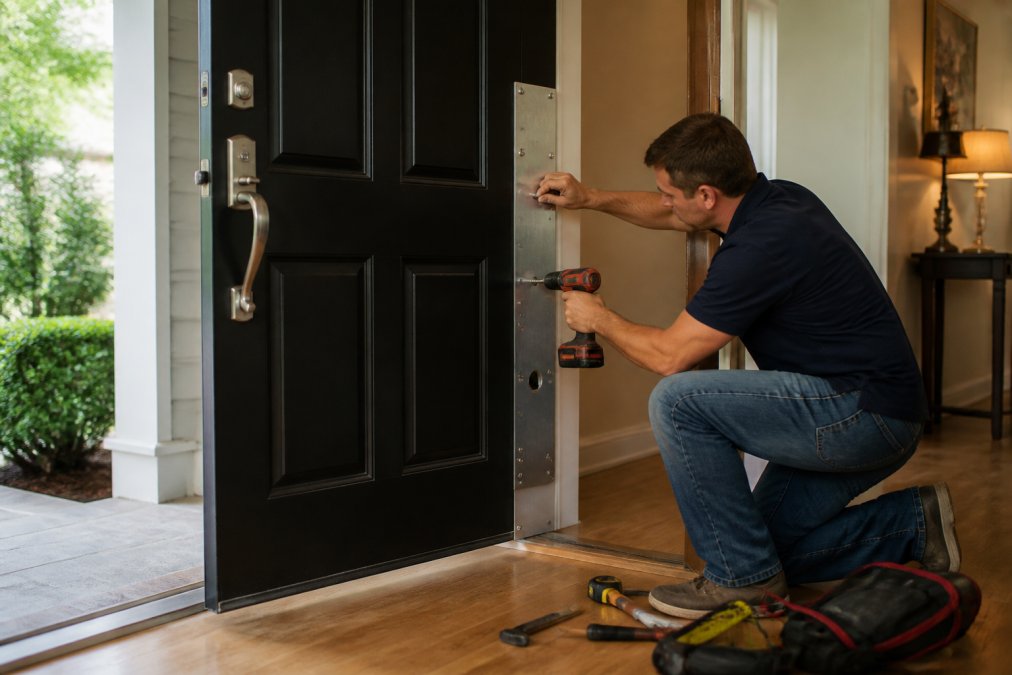
Close-up of a homeowner installing a heavy-duty steel door reinforcement plate around a door frame, tools laid out on the floor nearby in a well-lit entryway
Tip 1: Upgrade Deadbolts, Strike Plates, and Door Frames
The weakest link in most doors isn't the lock itself, it's the strike plate. Standard builder-grade strike plates use short screws that anchor only into door casing, not the structural framing. One solid kick transfers enough force to split the casing and pop the door open.
How to fix it:
- Replace your strike plate with a heavy-duty version using 3-inch screws minimum, driving into the structural stud behind the door jamb
- Upgrade to a Grade 1 ANSI-rated deadbolt, the highest residential security standard
- Inspect your door frame for cracks, soft wood, or previous repairs, these are structural vulnerabilities no lock can compensate for
- Install door frame reinforcement along the hinge and lock side
Door Armor's patented galvanized steel reinforcement system addresses this problem. It wraps the door frame's weak points in steel, distributes kick-in force across a larger surface area, and installs in under 30 minutes without permanent modifications. It's police-tested, carries a $500 Lifetime Guarantee against kick-ins, and matches existing hardware.
Pro Tip When installing a new deadbolt, test the bolt throw length. A proper residential deadbolt should have a minimum one-inch throw.
Tip 2: Secure Sliding Doors with Security Bars and Pins
Sliding glass doors are common vulnerabilities. The standard latch provides minimal resistance, and the door can often be lifted off its track from outside if anti-lift pins aren't installed.
How to secure a sliding door:
- Insert a cut-down metal rod or commercial security bar into the bottom track to prevent sliding even if the latch is defeated
- Install anti-lift pins through the top of the door frame to prevent the panel from being lifted out of the track
- Add window sensors to trigger alerts on unauthorized access
- Install a secondary surface-mounted bolt that engages the door frame
Security bars are inexpensive and highly effective against forced entry.
Tip 3: Control Who Has Your Keys
Key management is underrated in burglary prevention. A copied key bypasses every physical reinforcement you install. Many break-ins involve someone who had previous access: a contractor, former tenant, or neighbor.
Practical key control steps:
- Rekey your locks when you move, after contractor work, or after relationship changes
- Avoid hiding spare keys under doormats, in fake rocks, or above door frames
- Use a smart lock with a temporary code for house sitters or service providers instead of physical key copies
- Keep a log of anyone with a key and audit it annually
Watch Out Hiding a spare key outside creates a permanent vulnerability. Use a key lockbox with a combination instead, and change the code regularly.
How to Secure Windows Against Intruders
Windows are the second most common entry point after doors. Most residential windows have basic latches providing minimal resistance, and ground-floor windows are especially vulnerable.
Window Sensors and Locks That Actually Hold
Window sensors detect when a window is opened or glass is broken, triggering an alert. Ring Alarm Contact Sensor starts at $14.99 per unit; SimpliSafe's version starts at $14.99.
Beyond sensors, add physical security: install key-operated window locks on all ground-floor windows, use window pins or sash locks that prevent the window from opening more than a few inches, install window well covers or security bars for basement windows, and apply window security film, which holds glass together when broken and slows entry.
According to the CISA home security resources, securing all accessible windows and doors significantly reduces unauthorized access risk.
Landscaping and Visibility: Remove the Cover Burglars Rely On
Concealment is a burglar's best friend. Dense shrubs near windows, overgrown hedges, and poor lighting create opportunities to work unobserved.
Visibility improvements that deter crime:
- Trim shrubs near entry points to below window height
- Remove or thin trees and plantings that block sightlines from the street to your front door
- Keep fences low enough that yard activity is visible from neighboring properties
- Clear clutter from porches and side yards
Properties where activity is visible to neighbors are statistically less attractive targets.
Residential Security Tips 4-6: Lighting, Surveillance, and Neighbors
Lighting, cameras, and community relationships form the visible deterrence layer. They don't physically stop entry but change the risk calculation for potential intruders.
Exterior of a residential home at dusk with a bright motion-activated flood light illuminating the front door and driveway, warm porch light visible
Tip 4: Install Motion Sensor Lighting at Every Entry Point
Motion detectors connected to exterior lights are one of the most cost-effective deterrents. An intruder working in darkness suddenly flooded with light loses concealment and becomes visible to neighbors, passing cars, and cameras.
Placement priorities:
- Front door and porch
- Back door and side entrances
- Garage and detached outbuildings
- Driveway and walkway approaches
- Dark corners along fence lines
Use lights with a wide detection angle covering the full approach to each entry point. Set sensitivity to avoid constant triggering from small animals but activate for human-sized movement.
Pro Tip For continuous lighting, use smart plug-in timers to run interior lights on randomized schedules when away. This creates the appearance of occupancy, a proven crime deterrence measure.
Tip 5: Home Surveillance Cameras and Alarm Systems
Visible cameras communicate that a property is monitored, often enough to redirect a burglar to an easier target. Look for systems with remote monitoring via mobile app, local storage backup in addition to cloud storage, night vision capability, and two-way audio to communicate through the camera and deter entry.
Alarm systems add an audible deterrent. When a sensor triggers, a loud alarm creates urgency and draws attention. SimpliSafe and Brinks Home offer both self-monitoring and professional monitoring options. Professional monitoring means a response center is notified automatically and can dispatch emergency services. The best systems combine cameras, alarm sensors on all entry points, and monitoring.
Tip 6: Build a Neighborhood Watch Network
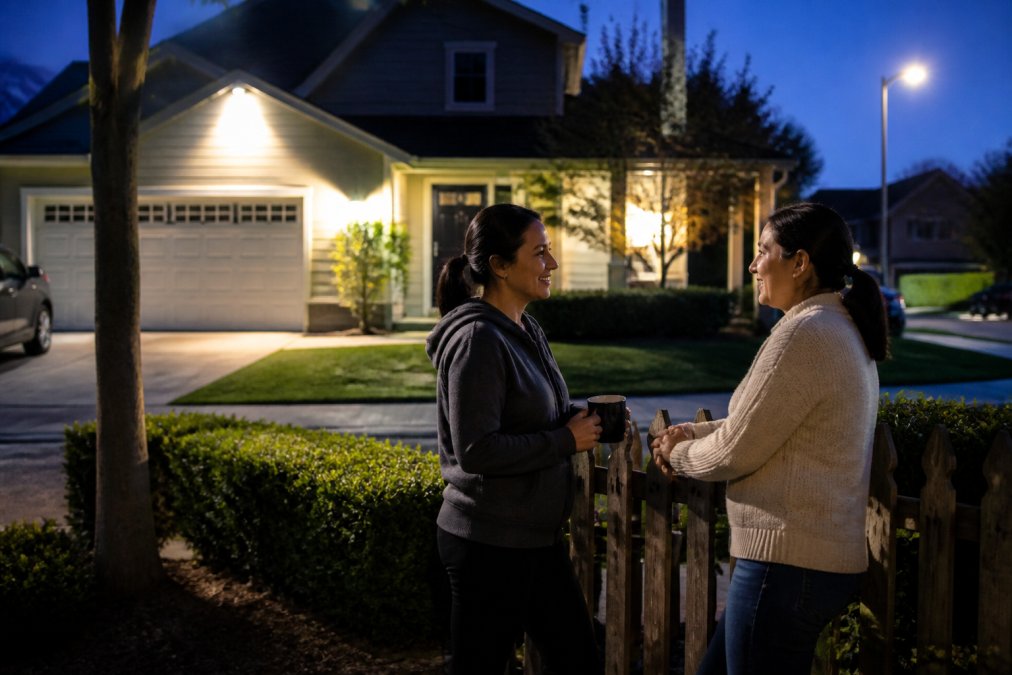
Getting to know your neighbors is a residential security strategy that costs nothing. According to the National Crime Prevention Council's neighborhood watch resources, organized neighborhood watch programs reduce residential burglary in participating communities.
How to build a practical network:
- Exchange contact information with immediate neighbors to alert each other to suspicious activity
- Join or start a neighborhood watch group through your local police department
- Use a neighborhood communication app to share real-time alerts about suspicious vehicles or persons
- Establish mutual agreements with trusted neighbors to collect mail and vary your property's appearance when traveling
A street where neighbors know each other and communicate is a higher-risk target than an isolated one.
Best Home Security Systems: DIY vs. Professional Installation
The DIY versus professional installation decision comes down to technical comfort, monitoring preference, and budget.
| Factor | DIY Installation | Professional Installation |
|---|---|---|
| Upfront cost | Lower | Higher |
| Installation time | Hours to a day | Typically same-day |
| Flexibility | Portable, renter-friendly | Often hardwired |
| Monitoring | Self-monitoring or optional professional | Usually includes professional monitoring |
| Best for | Renters, budget-conscious homeowners | Homeowners wanting hands-off setup |
DIY systems like Ring and SimpliSafe offer professional-grade monitoring without contracts or installation fees. Door Armor's system is designed for DIY installation with no special tools, no permanent modifications, and installs in under 30 minutes. It's renter-friendly and can be removed and reinstalled at a new property.
For most homeowners, a hybrid approach works best: DIY physical reinforcement on doors and windows, a self-installed sensor and camera system, and professional monitoring added as an option if budget allows.
Tips 7-8: Smart Home Cybersecurity and Vacation Protocols
These areas are often overlooked but increasingly important for modern homes.
Tip 7: Lock Down Your Smart Home Network
Smart locks, cameras, and alarm systems all connect to your home network. If that network is compromised, security devices become entry points for unauthorized access.
How to secure your smart home network:
- Use a strong, unique password for your home Wi-Fi, not the default router password
- Enable WPA3 encryption on your router; WPA2 is the minimum acceptable standard
- Create a separate guest network for smart home devices
- Enable two-factor authentication on all security app accounts
- Update firmware on your router and smart devices regularly
- Disable remote access features on devices you don't actively use
Watch Out Default router passwords are publicly documented online. If you've never changed yours, anyone on your network can access your router settings. Change it immediately.
Tip 8: Vacation-Specific Security Steps Most Homeowners Skip
An empty home for an extended period changes your risk profile. Social media posts announcing travel, paused mail delivery visible from the street, and darkened windows all signal absence.
Vacation security checklist:
- Hold mail and packages through USPS, or have a trusted person collect them daily
- Use smart plug timers on interior lights to simulate occupancy patterns
- Notify a trusted neighbor of your travel dates and provide emergency contact information
- Avoid posting travel plans on public social media until you return
- Set your alarm system and verify all sensors are active before leaving
- Ensure all doors have physical reinforcement in addition to locked deadbolts
- Arrange for lawn care or snow removal to maintain an occupied appearance
- Unplug garage door openers if you won't be using them
For vacation properties or rental units, physical door reinforcement that operates without power provides continuous protection regardless of alarm status or internet connectivity.
Home Security Checklist for Homeowners
Use this checklist to audit your current residential security posture.
| Security Area | Action Item | Priority |
|---|---|---|
| Door frames | Install reinforced strike plates with 3-inch screws | High |
| Deadbolts | Upgrade to Grade 1 ANSI-rated deadbolt | High |
| Door reinforcement | Add steel door frame reinforcement on all exterior doors | High |
| Sliding doors | Install security bar in track + anti-lift pins | High |
| Windows | Add window sensors and secondary locks on ground floor | High |
| Exterior lighting | Install motion sensor lights at all entry points | Medium |
| Cameras | Mount visible cameras at front door and rear entry | Medium |
| Alarm system | Install door/window sensors connected to alarm or monitoring | Medium |
| Landscaping | Trim shrubs below window height near entry points | Medium |
| Key management | Rekey locks; eliminate hidden spare keys | Medium |
| Smart network | Change router password; enable two-factor on security apps | Medium |
| Vacation protocol | Set timers, hold mail, notify neighbors before travel | Situational |
| Neighborhood | Exchange contact info with neighbors; join watch group | Low-cost, high-value |
The Department of Justice's Office of Community Oriented Policing Services crime prevention resources recommends a layered approach combining physical hardening with environmental design and community engagement. Revisit this list annually and after any significant change to your property or household.
Key Takeaway The most effective residential security tips work in combination. Physical reinforcement stops entry. Lighting and cameras deter attempts. Alarm systems create urgency. Neighborhood relationships provide ongoing surveillance. No single measure is sufficient on its own.
Forced entry through doors remains the most common method of residential break-in, and most homes have done nothing to address it beyond a standard deadbolt. Door Armor's patented galvanized steel reinforcement system directly solves this problem: it stops kick-ins and prying attempts, installs in under 30 minutes without permanent modifications, and operates 24/7 without power or connectivity. Backed by police testing, a $500 Lifetime Guarantee, and 500,000+ doors secured over 20+ years, it's the foundation every home security layer should be built on. Shop Door Armor and give your doors the protection they should have had from the start.
Frequently Asked Questions
What do burglars hate most when targeting a home?
Burglars consistently avoid homes that require time and noise to enter. Reinforced door frames, deadbolt locks with hardened strike plates, motion-activated lighting, and visible security cameras all signal high effort and high risk. Most residential break-ins are opportunistic: a burglar who cannot force a door open within 60 seconds will typically move on. Physical door reinforcement combined with perimeter lighting is one of the most effective deterrents available.
What are the most common entry points for residential burglars?
Front doors account for roughly one-third of all break-ins, followed by first-floor windows, back doors, and sliding glass doors. Garage side doors and unlocked basement windows are also frequent targets. Addressing these entry points with deadbolts, window sensors, security bars, and door reinforcement hardware covers the majority of real-world vulnerability. A complete home security checklist should audit every ground-level access point.
Does leaving a light or TV on actually deter burglars?
A static light or TV left on all day is less effective than most homeowners assume, because experienced burglars recognize the pattern. Smart plug timers that vary light and TV schedules throughout the evening are far more convincing. Pairing timed interior lights with motion sensor exterior lighting creates the impression of an occupied, alert household, which is a much stronger crime deterrence signal than a single lamp left on continuously.
How can I improve home security without a professional system?
Several high-impact upgrades require no professional installation. Reinforcing door frames with a steel reinforcement kit, adding a deadbolt with a Grade 1 rating, installing window sensors, fitting sliding doors with a security bar, and trimming shrubs near entry points all reduce break-in risk significantly. Motion sensor lights and a basic door and window alarm system are also straightforward DIY installs. These physical security measures work around the clock without monthly fees.
What extra steps should I take to secure a vacation home or rental property?
Vacant properties need layered protection because there is no one present to notice suspicious activity. Install a monitored alarm system with remote access, use smart locks so you can audit entry remotely, and set up exterior cameras with cloud storage. Reinforce all door frames and sliding door tracks before leaving. Ask a trusted neighbor to collect mail and vary the appearance of the property. Timed interior lights and a smart home security system with mobile alerts are especially valuable for extended absences.